Biceps variations
Inclined, supine and strict-curl positions place the torso differently relative to the upper arm and resistance. Choose the variation deliberately and record the configuration.


AMM · Arm Applications
Explore inclined, supine and supported options for biceps and triceps work. The key is the relationship between torso position, upper-arm position and the resistance.
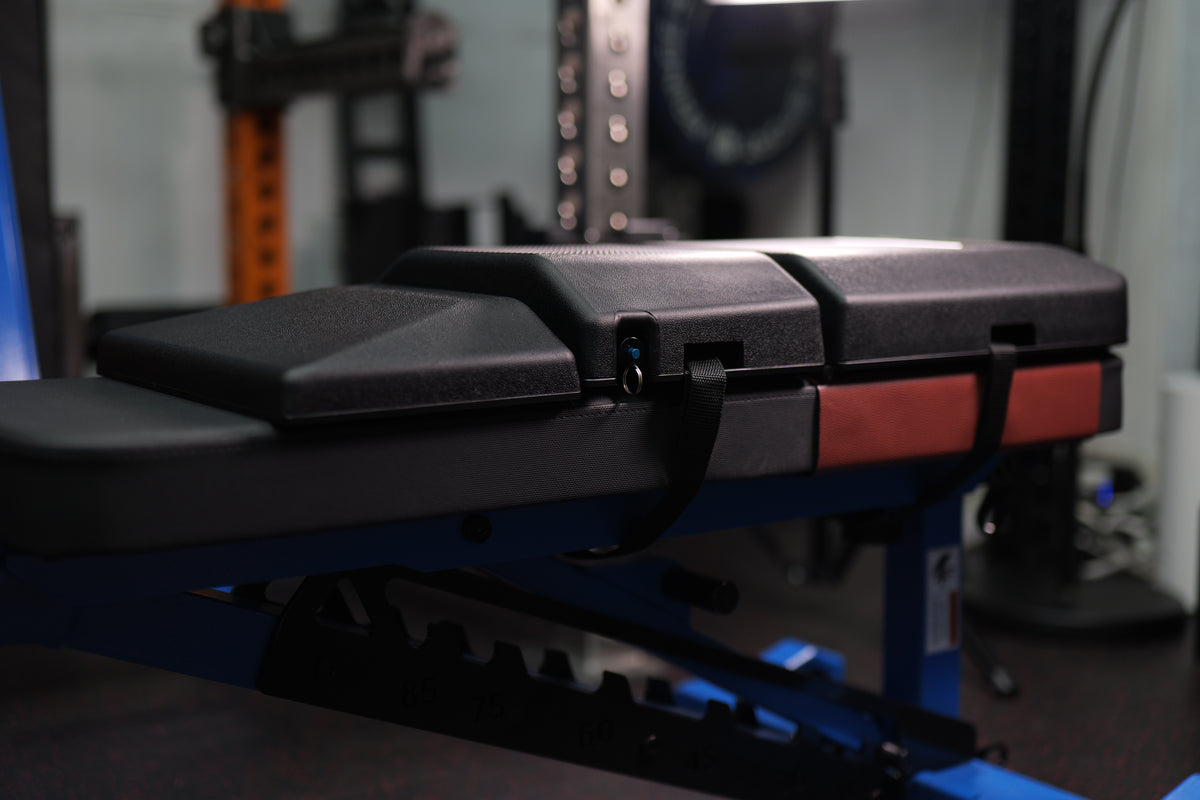
01 · Application logic
Inclined, supine and strict-curl positions place the torso differently relative to the upper arm and resistance. Choose the variation deliberately and record the configuration.
Confirm clearance around the head, bench and cables. A consistent upper-arm position helps define what counts as the intended repetition.
Set the pulley height and bench distance together. A cable variation cannot be reproduced from the exercise name alone.
02 · Compare the setup
“Curl” or “extension” leaves the support angle, arm position and resistance path unspecified.
Name the variation and record the support, bench angle, pulley position and chosen range.
03 · Exercise library
Choose a demonstration or expand a card for setup and coaching considerations. Written application guides are identified separately.
 ▶ Watch demonstration
Set a repeatable torso and upper-arm relationship for elbow-flexion work.
Set the positionSecure the pad and establish the demonstrated seated, inclined or supine position. Confirm room for the implement beside the bench.
Coach the repetitionKeep the upper-arm position deliberate and control the transition between lowering and lifting.
Check the configurationA different torso angle can change the starting position. Select a range that fits the athlete and exercise.
 ▶ Watch demonstration
Organize upper-arm position and support for triceps-focused work.
Set the positionSecure the pad, check head support and choose a cable or implement path that clears the head and equipment.
Coach the repetitionUse a repeatable elbow path and controlled lowering. Keep load modest while establishing the configuration.
Check the configurationBench angle, cable height and grip all change the task. Record them rather than treating all variations as interchangeable.
 ▶ Watch demonstration
Organize upper-arm position and support for triceps-focused work.
Set the positionSecure the pad, check head support and choose a cable or implement path that clears the head and equipment.
Coach the repetitionUse a repeatable elbow path and controlled lowering. Keep load modest while establishing the configuration.
Check the configurationBench angle, cable height and grip all change the task. Record them rather than treating all variations as interchangeable.
 ▶ Watch demonstration
Set a repeatable torso and upper-arm relationship for elbow-flexion work.
Set the positionSecure the pad and establish the demonstrated seated, inclined or supine position. Confirm room for the implement beside the bench.
Coach the repetitionKeep the upper-arm position deliberate and control the transition between lowering and lifting.
Check the configurationA different torso angle can change the starting position. Select a range that fits the athlete and exercise.
 ▶ Watch demonstration
Set a repeatable torso and upper-arm relationship for elbow-flexion work.
Set the positionSecure the pad and establish the demonstrated seated, inclined or supine position. Confirm room for the implement beside the bench.
Coach the repetitionKeep the upper-arm position deliberate and control the transition between lowering and lifting.
Check the configurationA different torso angle can change the starting position. Select a range that fits the athlete and exercise.
 ▶ Watch demonstration
Set a repeatable torso and upper-arm relationship for elbow-flexion work.
Set the positionSecure the pad and establish the demonstrated seated, inclined or supine position. Confirm room for the implement beside the bench.
Coach the repetitionKeep the upper-arm position deliberate and control the transition between lowering and lifting.
Check the configurationA different torso angle can change the starting position. Select a range that fits the athlete and exercise.
 ▶ Watch demonstration
Organize upper-arm position and support for triceps-focused work.
Set the positionSecure the pad, check head support and choose a cable or implement path that clears the head and equipment.
Coach the repetitionUse a repeatable elbow path and controlled lowering. Keep load modest while establishing the configuration.
Check the configurationBench angle, cable height and grip all change the task. Record them rather than treating all variations as interchangeable.
 ▶ Watch demonstration
Organize upper-arm position and support for triceps-focused work.
Set the positionSecure the pad, check head support and choose a cable or implement path that clears the head and equipment.
Coach the repetitionUse a repeatable elbow path and controlled lowering. Keep load modest while establishing the configuration.
Check the configurationBench angle, cable height and grip all change the task. Record them rather than treating all variations as interchangeable.
 ▶ Watch demonstration
Organize upper-arm position and support for triceps-focused work.
Set the positionSecure the pad, check head support and choose a cable or implement path that clears the head and equipment.
Coach the repetitionUse a repeatable elbow path and controlled lowering. Keep load modest while establishing the configuration.
Check the configurationBench angle, cable height and grip all change the task. Record them rather than treating all variations as interchangeable.
05 · Fit the session
Name the movement and the reason for changing the support.
Record the contact, equipment settings and intended range.
Use an effort and volume appropriate to the current program.
Evaluate control and performance before changing another variable.
Continue exploring
Advanced Muscle Mechanics®
Explore the product, understand the setup and choose the applications that belong in your training.