Joint Ops functional prototype shown from an elevated three-quarter angle with the Performance Interface surface visible
Functional prototype · DFM refinement · platform validation in progress
Joint Ops™ institutional pathway

HELP SHAPE THE PRODUCTION PLATFORM AROUND THE ROOM.

Joint Ops™ is an integrated selectable-surface bench platform being engineered for real institutional environments—not a showroom demonstration.

This pathway is for collegiate, professional, tactical, school, commercial, performance, research, and professionally supervised return-to-training environments interested in Joint Ops™—from early requirements conversations and controlled demonstrations to facility planning, structured evaluation, and future multi-unit deployment.

Built around the environment

START WITH WHAT THE ROOM NEEDS.

The right next step depends on the people, workflow, equipment, space, and planning priorities inside the facility.

Setup and repeatability

Can staff reproduce settings when the room is busy?

Surface selection, visible references, coaching language, and athlete turnover must work under normal session pressure.

Athlete and staff fit

Do the adjustments create useful options—not just more options?

Body size, bench angle, exercise choice, and training intent should reveal whether the system is clear and practical.

Handling and adoption

Can the platform earn its place in the room?

Movement, storage, cleaning, service access, staff education, procurement, and durability all affect adoption.

The facility rule

Start with the environment. Tell us what the room needs to accomplish, where the current setup creates friction, and what Joint Ops™ would need to do to earn a place in the facility.

Institutional engagement

THREE WAYS TO ENGAGE.

The right starting point depends on where the organization is today and what it wants to understand, plan, or pursue next.

Stage 01 · Explore

Clarify the Requirement

Start with the facility, the users, and the problem the room is trying to solve.

  • Requirements conversationDiscuss setup, adjustment, storage, education, workflow, staff adoption, and the current bench environment.
  • Controlled prototype demonstrationExamine the functional logic and current development direction without treating the prototype as a final production unit.
Stage 02 · Plan

Map the Facility Path

Translate interest into practical room, deployment, procurement, and education requirements.

  • Facility and multi-unit planningConsider station count, room layout, rack compatibility, onboarding, storage, service, and phased deployment.
  • Institutional requirementsAddress budget cycles, approvals, purchasing methods, documentation, branding, asset control, and tactical or government needs.
Stage 03 · Engage

Choose the Right Next Step

Move forward in the way that fits the organization and the platform’s development stage.

  • Structured facility evaluationQualified environments may participate in a defined pre-production evaluation when that route is useful to both the facility and AMM.
  • Professional or research inquiryReturn-to-training workflow and research questions require qualified supervision and, where appropriate, separate governance.
What we need to understand

THE ROOM DEFINES THE REQUIREMENT.

We need enough context to understand the environment, judge fit, and determine what a practical Joint Ops™ pathway could look like for the organization.

Low-angle view of the Joint Ops functional prototype showing the frame, wheels, undercarriage, and integrated bench structure
Current functional prototype · frame, mobility, service access, production geometry, weight, finish, and mechanisms remain subject to validation

Start with the environment—not a feature wish list.

The inquiry should explain who will use the platform, how the station needs to operate, and what the organization is interested in exploring or planning.

01

People and use

  • Users, supervision, weekly volume, and primary exercises
  • Who owns setup, education, and equipment accountability
02

Room and workflow

  • Station count, floor plan, rack compatibility, traffic, and storage
  • The current bench or workflow problem the room is trying to solve
03

Deployment and procurement

  • Planning horizon, budget cycle, approval path, and purchasing method
  • Branding, asset tags, documentation, warranty, and service needs
04

Priorities and fit

  • What the platform would need to improve, simplify, or enable in the room
  • What matters most to the organization as it considers a future Joint Ops™ deployment
01Selectable surfacesPreserve conventional support while adding the Performance Interface™ in the same station.
02Repeatable settingsClear back, lumbar, seat-angle, and fore-aft references for staff communication.
03Move, store, and serviceInstitutional handling, floor protection, cleaning, parts, and service access.
04Staff adoptionMode selection and education that do not turn every set into a mechanical lesson.
What happens next

FROM INQUIRY TO THE RIGHT NEXT STEP.

Submitting the form begins a facility-fit assessment—not a reservation or allocation.

01

Facility-fit assessment

AMM evaluates the organization, use case, environment, timing, planning needs, and primary interest.

02

Focused follow-up

AMM may request clarification about users, room constraints, station count, supervision, timing, or procurement.

03

Discovery or demonstration

Qualified environments may advance to a requirements call, planning discussion, design-feedback conversation, or controlled demonstration.

04

Define the pathway

The next step may be continued planning, a structured evaluation, future deployment discussion, research inquiry, or a pause until development and availability align.

Facility inquiry

TELL US ABOUT THE ROOM.

Approximate counts and timelines are acceptable. The environment, use case, and what you are interested in exploring matter most.

  • Users, supervision, station count, and current bench fleet
  • Workflow, floor space, storage, procurement, and timing
  • What you are interested in exploring, planning, or improving
Use the best information currently available.

You do not need a final budget, exact unit count, or approved purchase plan to begin the facility-fit assessment.
1. Contact and organization
2. Room and planning
3. Facility interest

Submission begins a facility-fit assessment and transactional follow-up. It does not subscribe you to promotional email or SMS and does not guarantee a demonstration, structured evaluation, unit allocation, pricing, release date, research relationship, or purchase terms. See the Privacy Policy.

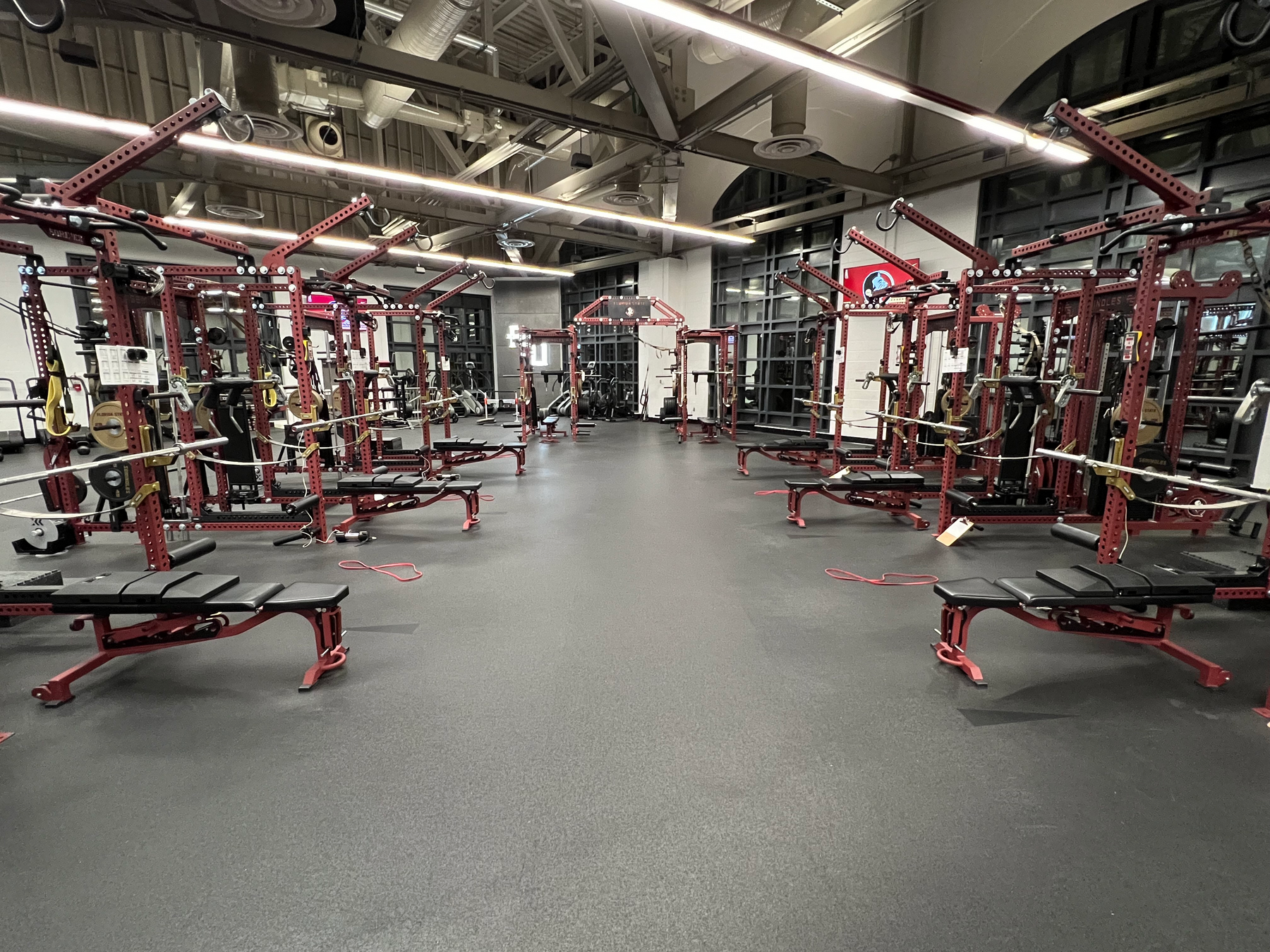
Launch Pad units installed across benches in a collegiate training facility
Available now

DEPLOY THE LAUNCH PAD® ACROSS THE BENCHES YOU ALREADY OWN.

The Launch Pad® adds a patented Performance Interface™ without replacing the current bench fleet. Joint Ops™ is the integrated platform in development; The Launch Pad® is the current deployment path.

Facility pathway FAQ

BEFORE YOU SUBMIT.

Does submitting the form reserve a Joint Ops™ unit?
No. It begins a facility-fit and requirements assessment. Any later demonstration, evaluation, allocation, or purchase discussion depends on DFM, validation, availability, mutual fit, and written terms.
Can a facility participate in a structured pre-production evaluation?
Potentially. Qualified environments may be considered when the use case, supervision, development timing, and feedback opportunity are a strong fit. A structured evaluation is one possible pathway—not a requirement for expressing facility interest.
Can a university or laboratory propose a research collaboration?
Yes. Qualified investigators may submit a non-confidential inquiry. Protocol, approvals, funding, access, data rights, authorship, and publication terms require separate evaluation and written agreement.
Do published Launch Pad® studies establish Joint Ops™ outcomes?
No. The studies evaluated The Launch Pad®. Joint Ops™ requires separate validation and product-specific evidence.
Can a facility use The Launch Pad® now and still follow Joint Ops™?
Yes. The Launch Pad® upgrades compatible benches today while Joint Ops™ continues through production engineering and validation.